
When Repeat Work Still Creates Repeat Challenges
Offshore projects often involve familiar scopes, yet the same tooling issues continue to create delays. Interface mismatches, missing accessories, and last-minute engineering changes can disrupt schedules, increase vessel costs, and reduce operational efficiency. The question is no longer whether these risks exist, but how early they can be removed.
The question becomes straightforward. When preparing tooling for offshore operations, why start from zero every time?
Start with ROV Tooling Kits That Work
A standard ROV tooling kit is not theory. It is built from offshore experience, shaped by what has been required, mobilized, and proven across hundreds, if not thousands, of campaigns.
These kits group together tools, interfaces, and supporting equipment commonly used for defined tasks such as inspection, cleaning, torquing, or light intervention. Instead of assembling tooling component by component, project teams start with a proven baseline that reflects how work is completed offshore.
This approach does two things immediately:
- Reduces engineering and planning time during early project phases
- Identifies interface requirements and constraints earlier in the schedule
Just as importantly, ROV tooling kit configurations included the accessories and spares that keep operations moving.
What Does a Standard ROV Tooling Kit Include?
A standard ROV tooling kit is defined by function rather than a fixed list of components. The exact configuration will vary depending on the scope of work, but most kits are structured around a combination of core tools, interfaces, and supporting equipment required to execute common subsea tasks safely and efficiently.
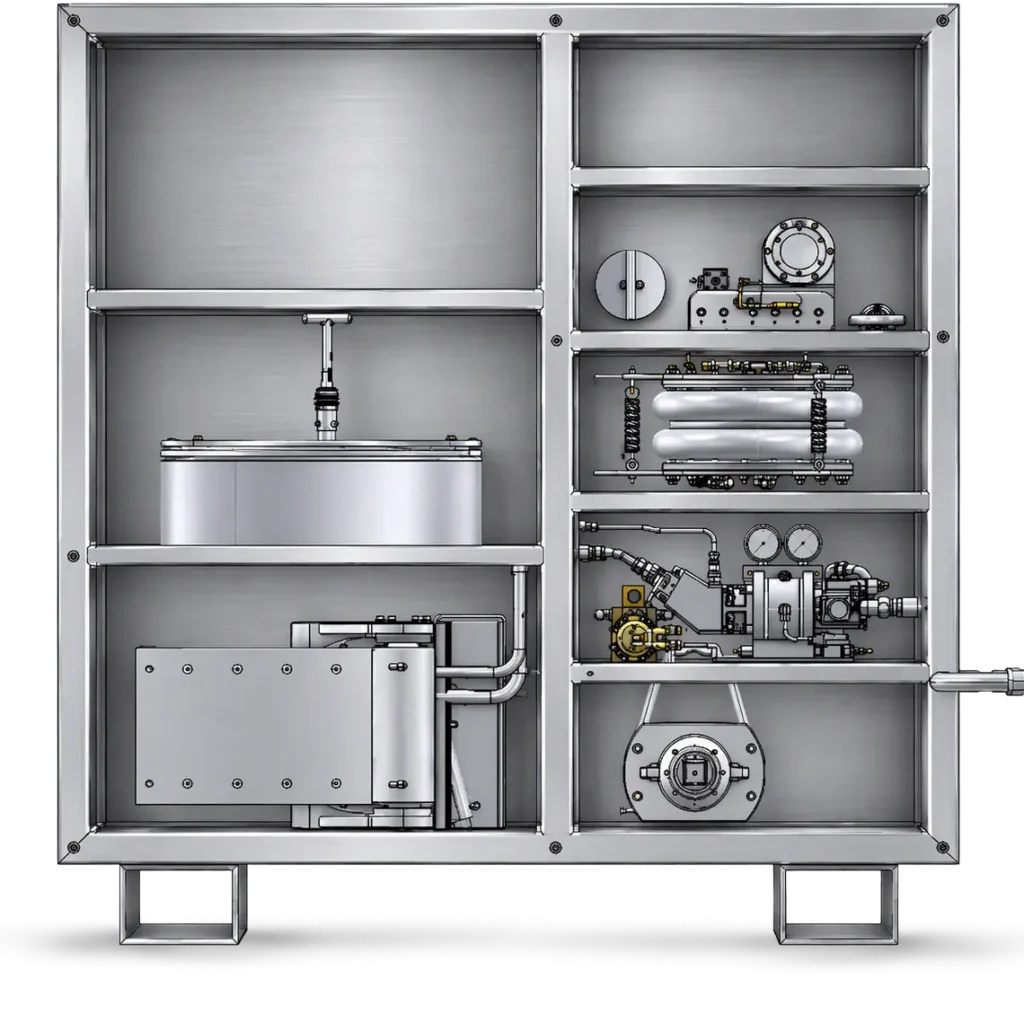
For typical inspection, maintenance, and light intervention scopes, a standard kit may include:
- Core intervention tools such as cleaning tools, torque tools, and manipulators used to perform routine subsea operations
- Interface hardware and adapters to ensure compatibility between tooling, ROV systems, and subsea assets
- Hydraulic and electrical distribution equipment required to power and control tools offshore
- Control systems and software interfaces that allow for consistent operation and integration with the host vehicle
- Handling and deployment equipment to support safe mobilization, installation, and recovery
- Spare parts and consumables identified through previous deployments to maintain operational continuity
The value of the kit is not just in the components themselves, but in how they are packaged and validated as a working system. Equipment is selected based on how it performs together, not in isolation.

Engineering Out Mobilization Risk
Where do most delays typically happen?
In many cases, they emerge during tooling mobilization and integration. Issues that are not complex in isolation become critical when identified late. In some cases, vessel schedules are fixed, offshore time is constrained, and the cost of change is significantly higher.
Standard tooling kits address this by shifting risk earlier in the lifecycle.
- Interfaces are defined and validated in advance.
- Tool compatibility is understood before equipment reaches the vessel.
- Supporting documentation is developed alongside project development rather than as an afterthought.
The approach helps reduce late-stage surprises from subsea operations, reduce rework, shorten integration time onboard, and improve the ability to maintain project schedules.
Consistency Without Losing Flexibility
Standardization is sometimes viewed as a constraint. In practice, it provides a reliable starting point.
When tooling configurations are consistent, ROV crews are more likely to be familiar with the equipment they are operating. This reduces the need for workarounds offshore and supports execution during time-critical activities.
For ROV tooling teams, standardization simplifies how equipment is maintained, stored, and tracked. Lessons learned from one campaign using a standardized tooling kit can be applied directly to the next.
At the same time, these kits are not fixed solutions. Tools and spares can be added or remove to suit specific project requirements. Procedures can be adjusted to reflect the demands of the job.
Flexibility remains. The difference is that it is applied from a stable, proven tooling kit foundation rather than built from first principles each time.
How Offshore Lessons Improve Future Campaigns
Standard tooling kits are continuously refined and improved through use. Feedback from offshore teams plays a central role in how kits evolve.
- Tools that improve efficiency become part of the standard kit
- Components that introduce friction are reassessed
- New technologies are incorporated once proven in the field
This creates a practical feedback loop between engineering, operations, and asset management.
Turning Experience into Readiness
Standardization is not about limiting engineering flexibility. It is about starting from proven configurations that reduce uncertainty and allow project teams to focus their effort where it creates the most value. By applying lessons learned across offshore campaigns, standardized ROV tooling kits help improve readiness, reduce mobilization risk, and support more predictable project execution.